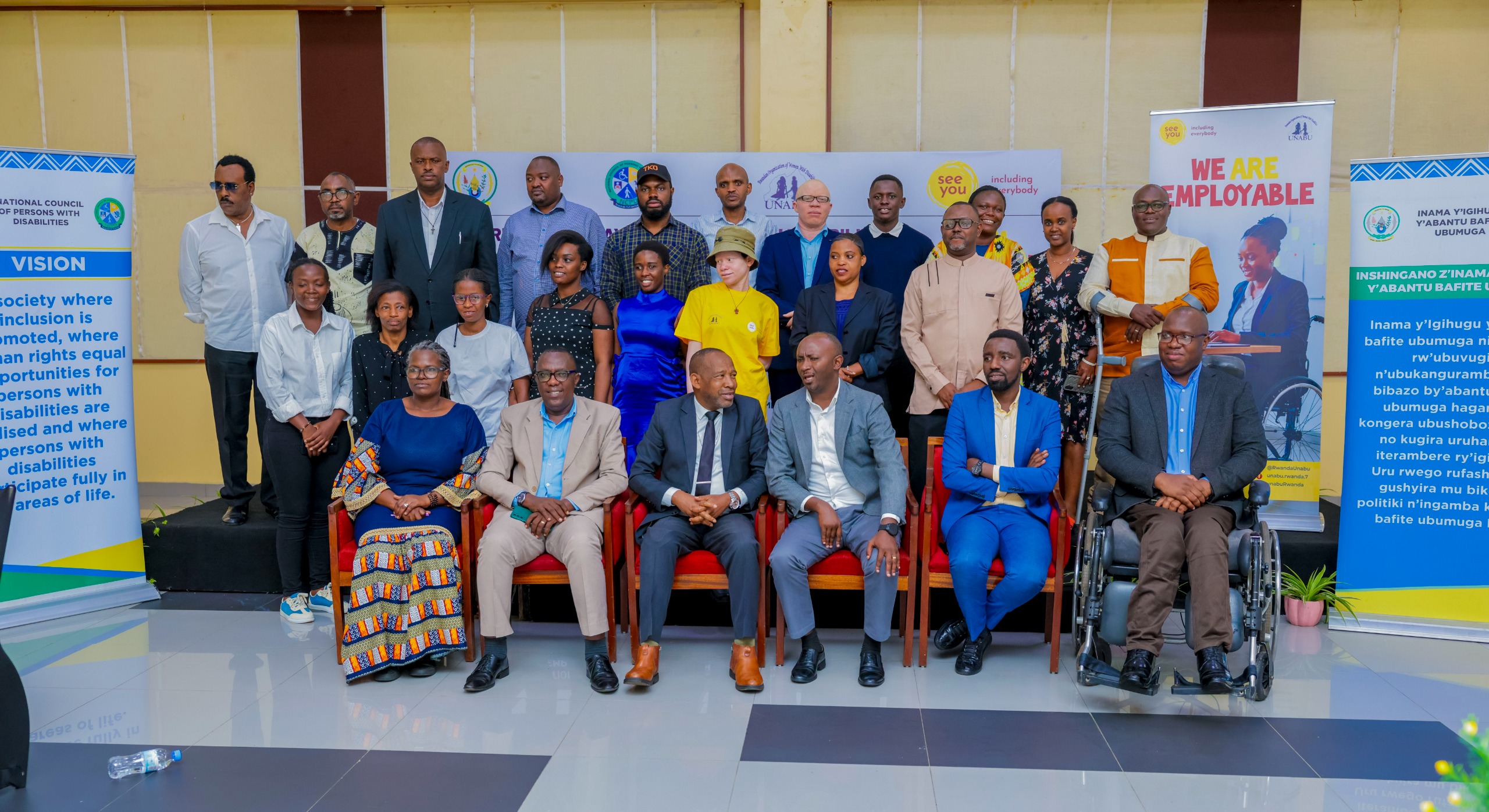

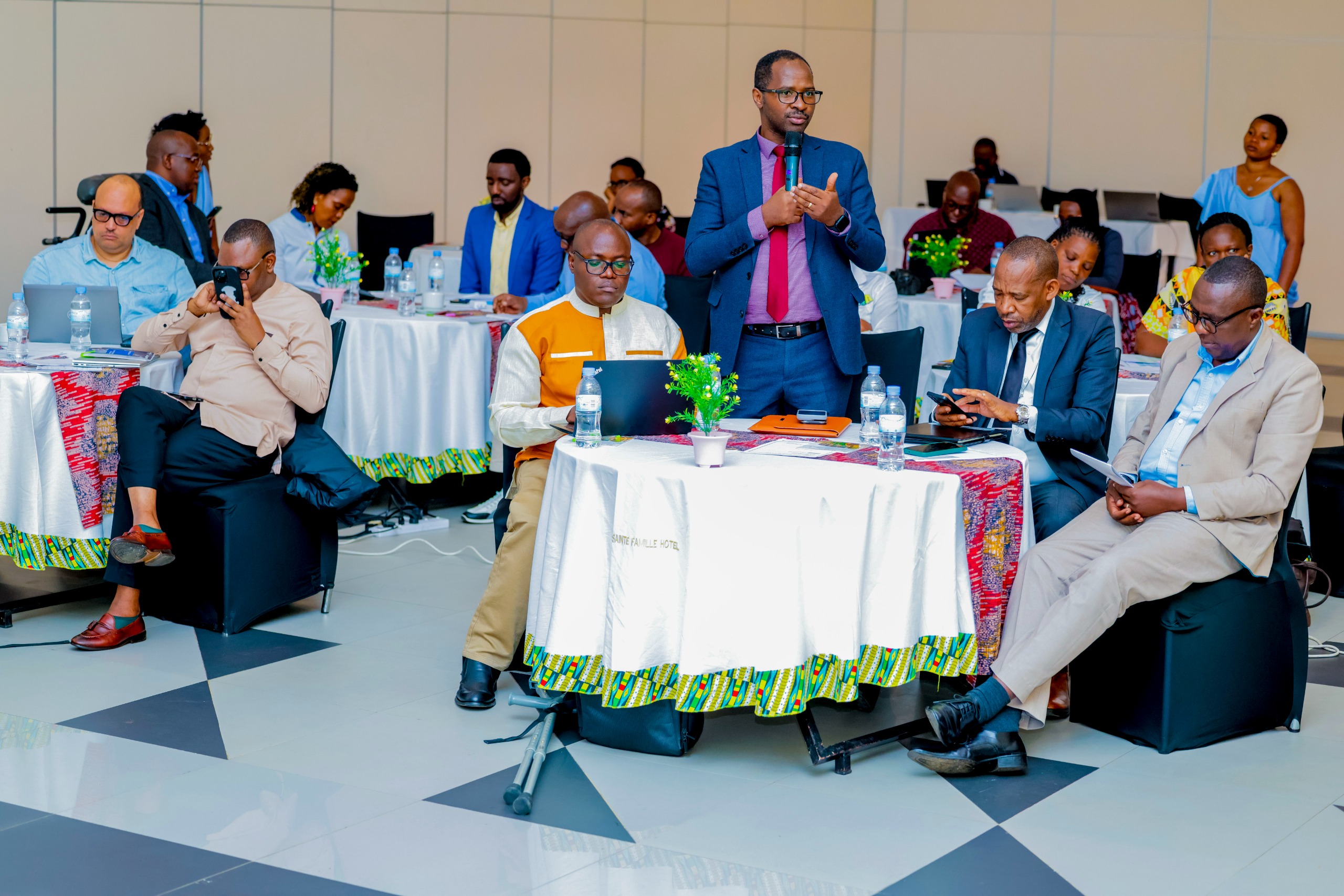
The right to work is not a gift. It is a fundamental human right. This powerful message anchored the National Dialogue on Employment for Persons with Disabilities (PWD), co-hosted by the National Council of Persons with Disabilities (NCPD) and UNABU on 28/11/2025 at Kigali Sainte Famille Hotel during the disability week.

Bringing together government institutions like MIFOTRA, RTB, Rwanda Housing Authority, Private Sector, civil society and people with disabilities organizations, the dialogue served not just as a time to address gaps, but also to celebrate the significant progress Rwanda has made, including the enabling legal framework government and non-government backed scholarships, that are advancing people with disabilities’ inclusion in higher education
The Critical Challenge: access to TVETs schools for persons with disabilities
While Rwanda’s disability inclusion policies are strong, critical weaknesses in implementation at the ground level, particularly within Technical and Vocational Education and Training (TVET) institutions, remain a major obstacle for persons with disabilities.
Findings from the assessment conducted by UNABU on inclusiveness of TVETs schools presented at the dialogue, highlighted persistent challenges towards employment for persons with disabilities:
- Learners with disabilities made up about 0.9% of the total learners in the education system (38,937 out of 4,159,782).
- In primary education, leaners with disabilities constituted about 1.1% of learners, and in secondary education, about 0.6%. (including TVET where PWD are very rare)
- Labour Force Participation Rate: 20.3% People with disabilities versus 60.3% People without Disabilities
- Unemployment Rate: 18.9% People with disabilities versus 17.2% People without Disabilities
- Proportion Outside the Labour Force: 79.6% People with disabilities versus 39.7% People without Disabilities
- Enrolment of learners with disabilities to 20 TVETs schools participant to the assessment in Bugesera and Nyabihu districts stands at 0.5%
- Institutions show strong performance in Governance (68.3%) and Service Delivery (71.6%). However, Implementation is affected by a lack of Financial (16%) and Human (43%) Resources.

To bridge the gaps, the dialogue emphasized the need for partnerships between government institutions, private sectors employers, civil society organisations and organisations of persons with disabilities. This collaboration must inform persons with disabilities professional orientation, ensuring their skills are immediately useful in high-employment sectors like factories and various industries.
The Road ahead: Four actionable Recommendations
The dialogue resulted in a unified and actionable mandate for collective change. These are the top four recommendations that stakeholders committed to advancing:
- Mandate the “Quota System”: Participants called for legal advocacy to introduce a Quota System, a certain, mandated percentage of people with disabilities representation in both public and private sector employment. This is essential to guarantee access to employment, especially for Women and Girls with Disabilities.
- Strengthening partnership: Establish a dedicated network promoting inclusive employment for persons with disabilities through collective advocacy and connecting people with disabilities to inclusive employers
- Invest in Equity: Recognizing that persons with disabilities often require adapted learning environments; participants advocated that inclusion strategies must provide for extra time and extra cost to learn complex skills, ensuring equity and quality training outcomes. Therefore certification should take into consideration these specific needs with specific attention to persons with disabilities never been in school attending community based vocational training centres.
- Prioritize Work-Based Learning (WBL): There must be a dedicated focus on implementing and strengthening Work-Based Learning programs. WBL is key to transitioning PWD from training to productive, dignified employment.
- Embrace Self-Advocacy: Participants strongly affirmed that people with disabilities must advocate for themselves. Every person with disability is empowered to “think big,” showcase their existing skills, and lead their own advocacy efforts, which is often the most fruitful path to securing rights and opportunities.
UNABU’s Commitment
UNABU remains committed to collaborating with NCPD, MIFOTRA, RTB, Rwanda Housing Authority and all partners to turn these critical recommendations into reality. The journey from policy framework to full economic inclusion is long, but through coordination, data-driven planning, and the unwavering resolve of PWD themselves, we will achieve a truly inclusive labour market.

Join us in demanding a truly inclusive employment future for all Rwandans! For more information on the National Dialogue and to read the full recommendations report, please contact the UNABU office